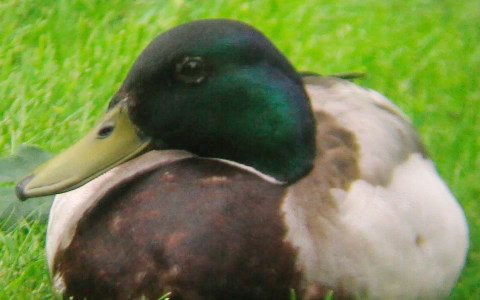
The male Mallard has a yellow Bill, green Head, thin white Neck ring, brown Breast and pale Flanks.
These terms are used in identification. To see the named part, just point at it.
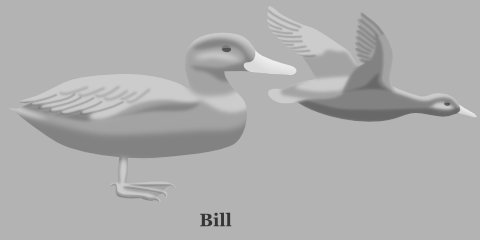 Also known as 'Beak', usually broad for sifting food. Bill |
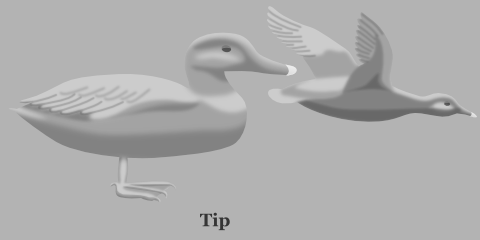 Some ducks have a small hook on the tip, known as a nail. Bill tip |
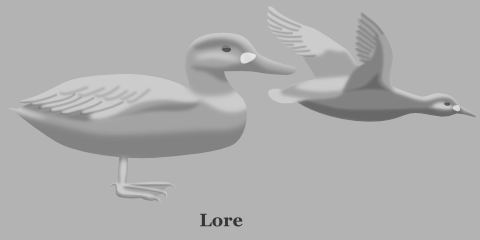 Between the eye and bill, often pale. Lore |
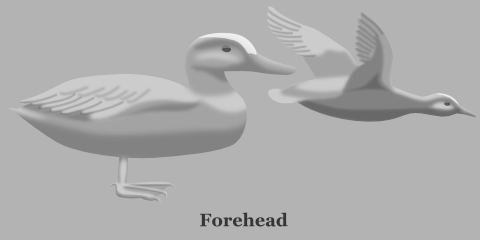 Forehead
|
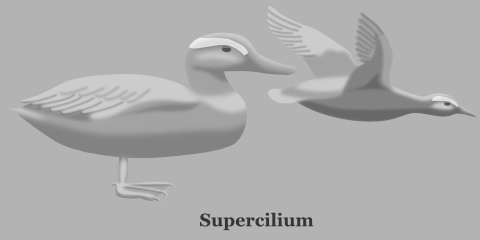 Stripe above the eye, often pale. Supercilium |
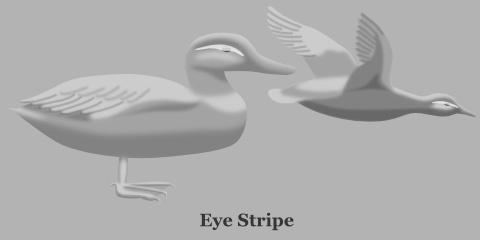 Stripe in line with the eye, often dark. Eye Stripe |
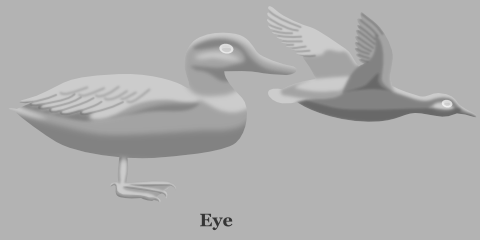 Eye
Eye
|
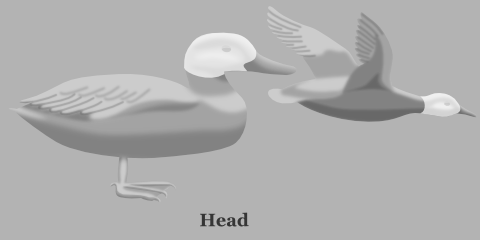 Head
Head
|
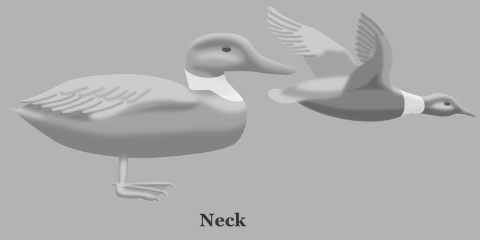 Some species have a neck ring. The neck can stretch quite long or fold back. Neck |
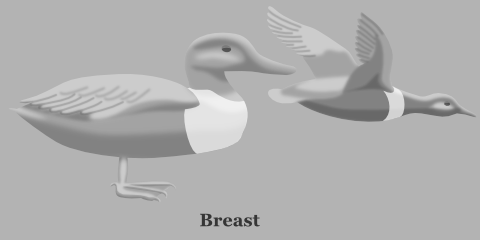 Often contrasts with the body. Breast |
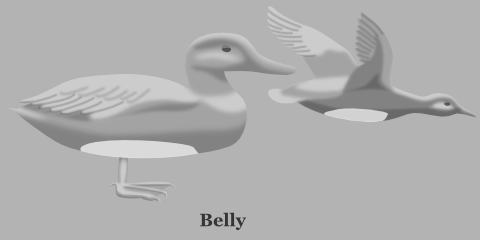 Belly
Belly
|
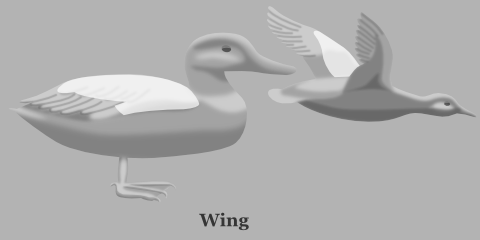 Wing
Wing
|
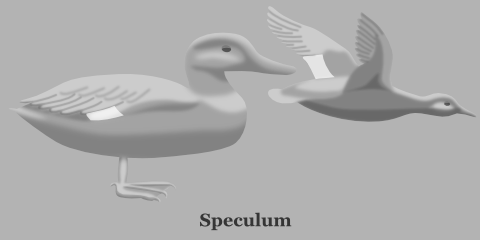 These often have distinctive colours Diagnostic but may be hidden when wings are folded. Speculum |
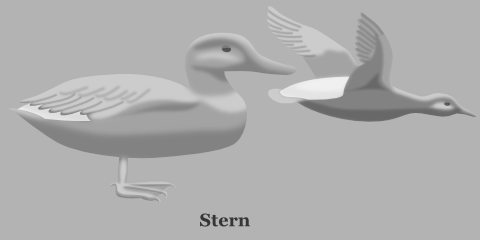 Stern
Stern
|
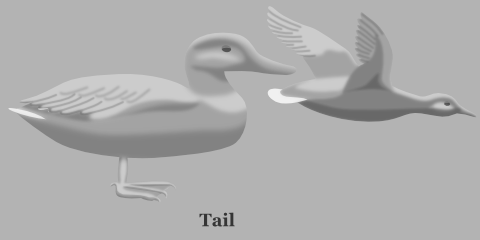 Usually small, but some ducks have display feathers. Tail |
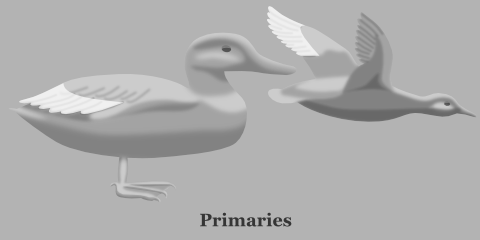 The main flight feathers. Primaries |
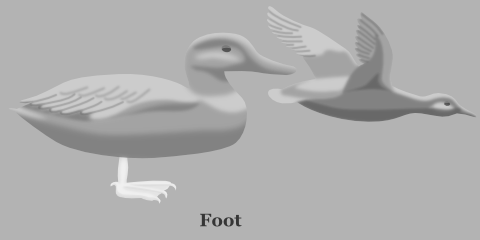 Foot
Foot
|
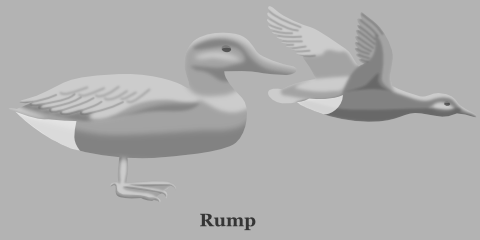 Rump
Rump
|
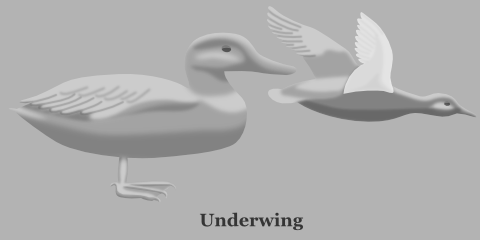 Underwing
|
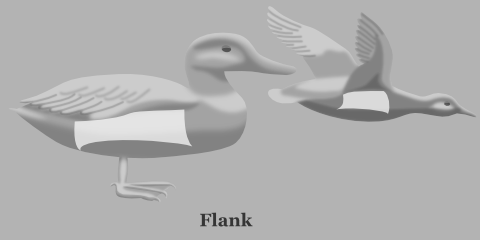 Flank
Flank
|
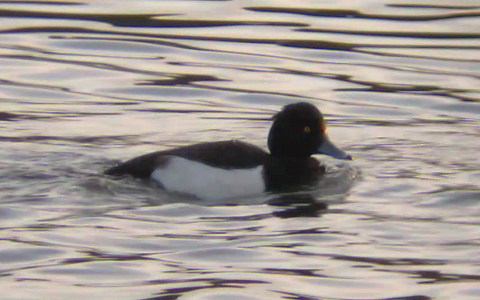 Male Tufted Duck.
Small diving duck.
Black with a white flank.
In bright light the head shines with iridescent purple
A tuft hangs down the back of the head.
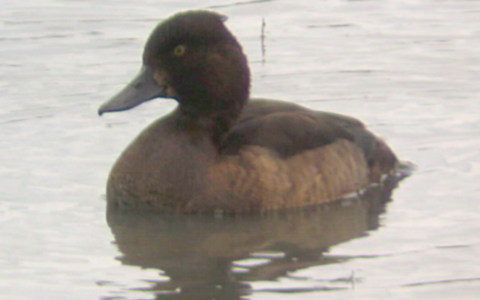 Female Tufted Duck.
Small diving duck.
Dark brown with a lighter flank.
The small tuft sometimes shows at the back of the head.
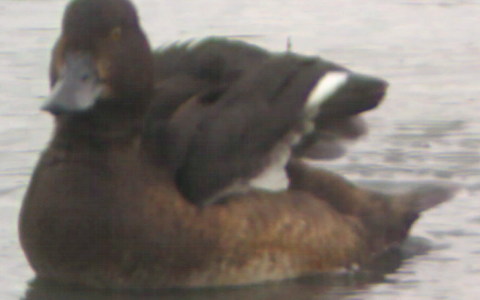 Female Tufted Duck lifting wings.
A white stripe along the wing shows in flight in both sexes.
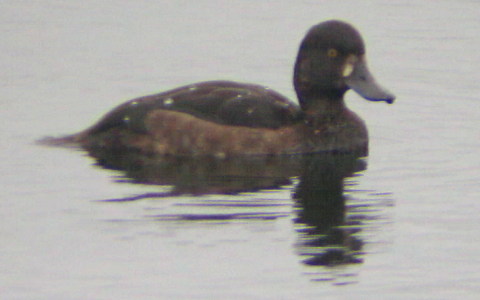 Female Tufted Duck.
Has a pale lore in winter.
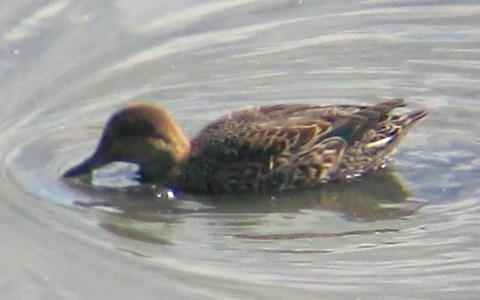 Teal Female.
Small dabbling duck.
Speculum is iridescent green, shines brightly in direct light.
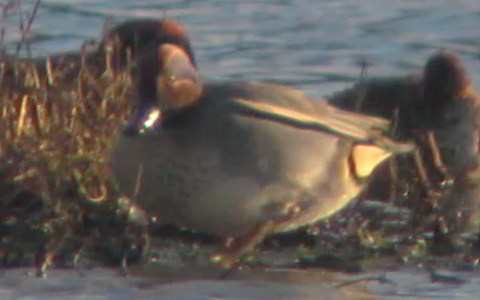 Teal male.
Small dabbling duck.
Dark red and green head, grey body & wing.
Yellow patch on black rump.
White stripe on wing edge.
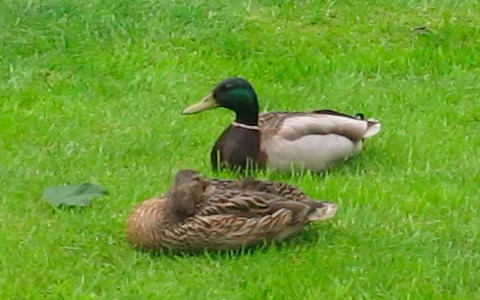 Mallard male behind dozing female.
Large dabbling duck.
Note the curled feathers above the male's tail.
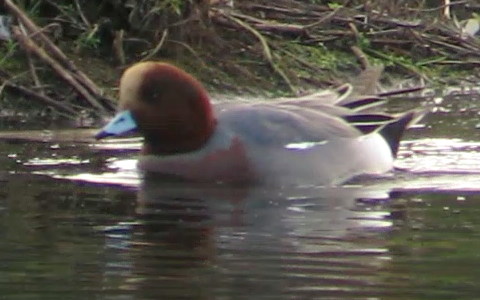 Male Wigeon.
Medium grazing duck.
Blue bill, white edged black primaries.
Cream forehead on brown head, pink breast.
Grey wing & flank.
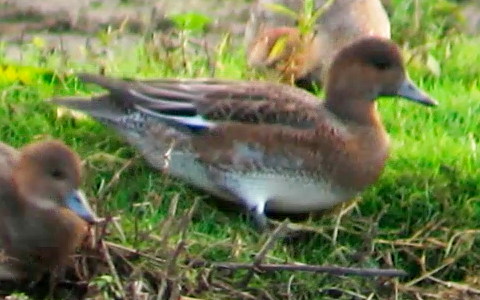 Female Wigeon.
Medium grazing duck.
Blue bill, white edged black primaries.
Reddish brown head, breast & flank.
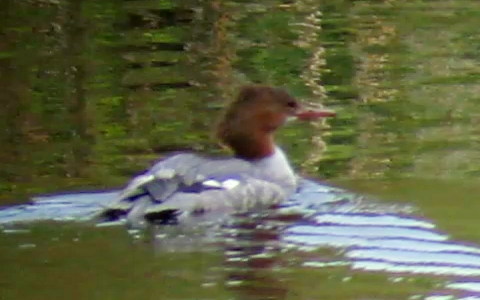 Female Goosander.
Large sawbill, a diving duck with a narrow bill for catching fish.
Brown head and grey body.
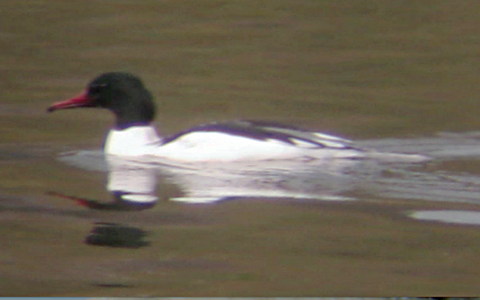 Male Goosander.
Large sawbill, a diving duck with a narrow bill for catching fish.
The creamy white body and black wing is striking.
The green head often appears blackish.
In breeding plumage the breast is pink.
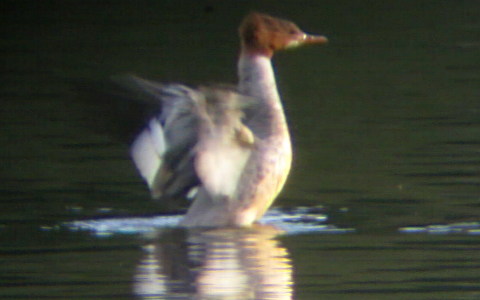 Female Goosander.
Both sexes have a broad white speculum.
|
Behaviour helps with identification, is the duck dabbling, diving or grazing? After the breeding season ducks go into eclipse when they grow new feathers. For a while they all look similar, male female and juvenile. As the feathers start to wear the male's breeding colours are gradually revealed. |
Ducks eat small invertebrates and fish, as well as vegetation. The bill can act as a filter, sieving out food from water.
Bill shapes vary, depending on the feeding method. Broad for filtering small items of food. Long & thin with a serrated edge for catching fish.
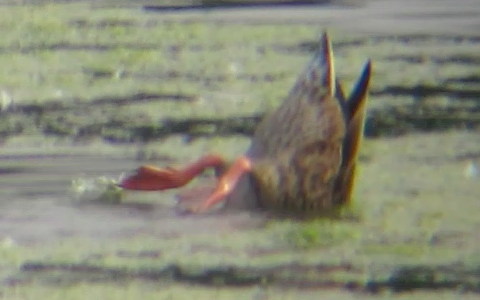 Dabbling stretching down to feed in shallow water.
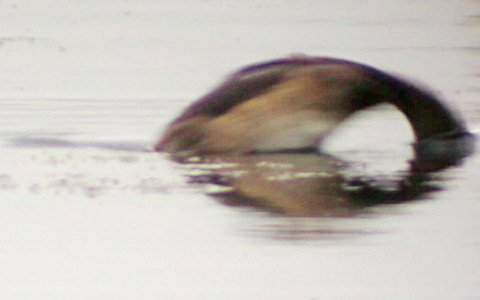 Diving to feed in deep water.
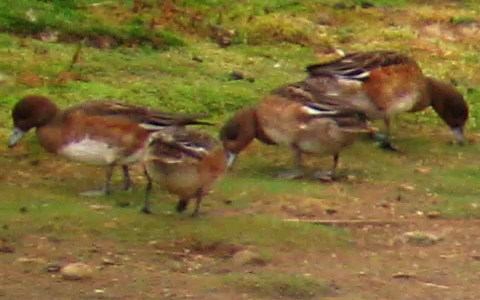 Grazing on land.
spacer